
Community building series #3: Dignity, Dependence & Care
Post 3 in a longer series exploring common issues in community building and how we might approach them.

This is part 3 of a community-building series. Please see Part 1 here and Part 2 here.

What does it mean to say that a human being has inherent dignity? What remains of, or gives us this sense of dignity when we suffer from illness, disease or incapacitation? Is it possible for a community and a family to help someone retain a sense of dignity if they are dependent on others for care or basic functioning? I have been thinking about these questions for as long as I can remember, even in my childhood (although I wouldn’t have phrased it in those terms of course).
A key pillar of the religious teaching I received throughout my childhood was the obligation on us to visit the sick and elderly. Whenever anyone in our family, street or wider community was ill, the grown ups all did regular visits to their home. As I accompanied my elders to these visits, I became accustomed to seeing very ill, elderly people. I had also seen periods of illness up close in my own family. It was just part of life, something we would all need to prepare for and deal with eventually.
I always knew that old age and illness would one day come for me too. “Who will look after you when you are old?” was the common refrain of every aunt, parent and relative upon discovering, with horror, that I had moved out alone. They worried that if I died without a family of my own, no one would know I was dead until cats or fleas discovered my decaying corpse. Every aunt had some kind of horror story of someone, somewhere, who this had happened to. (As it turns out, what my family didn’t know at the time was that the tech saviours would one day develop the app for this exact scenario- the “Are you Dead Yet” app will ask you to tap a button once every day and alert an emergency contact if they fail to tap in for two consecutive rows. If you don’t like apps, how about an AI companion robot? as a surrogate grandchild?).
This wasn’t just a question hanging over the childless, either. There were many things that shocked me when I moved out of my tight knit community into the wider world. What shocked me most was how many people — including people with children — fully expected to die alone, incontinent, and forgotten in a care home. My first landlady and her friends joked darkly about jumping off Beachy Head before it came to that. Others insisted they wouldn’t want their children to care for them: they didn’t want to be a burden, or to be seen in states of vulnerability. Better, they thought, to rely on professionals — if they could afford it — or to disappear early. In the Japanese film Plan 75, the state offers citizens over 75 a peaceful death in exchange for a small stipend. “What would be so bad about that?” an elderly woman once asked me.
At the same time, I always knew that I would one day be called upon to look after my parents and others as they aged. This was just an unspoken, known assumption, so unremarkable in its certainty that it wouldn’t have even been worth saying out loud had I not started to encounter people who didn’t share this assumption. Right at the start of my working life, I knew I wanted to prioritise a future career structure that would afford me the maximum amount of resources and flexibility to take time off work to support my youngest siblings who were at the earliest stages of life, and then my parents when they eventually aged into needing end of life care - obligations that sounded foreign and frankly, insane, to my peers and friends. They simply couldn’t understand it, and I couldn’t understand their lack of planning or attention to these matters.
Dignity and Dependence
Recent years and periods of acute family illnesses have sharpened these questions for me. This is not unique to me - many countries across the world are coming to terms with what it means to live in an ageing world. Healthcare systems are increasingly deciding on whether to allow forms of assisted dying or euthanasia. In the UK, the Terminally Ill (End of Life) Bill (more commonly known as the Assisted Dying Bill) is continuing to generate immense political fury and debate as supporters of the Bill fear it may never pass the House of Lord. I follow updates on this Bill from groups on opposing sides of the spectrum - from pro-Bill advocates such as Dignity in Dying to anti-euthanasia / assisted dying groups such as Care Not Killing. The debate’s fault lines span numerous issues, but at its core, many differences arise from contrasting emphases on the sanctity of life versus autonomy and human dignity, as well as divergent views on whether assisted dying upholds human dignity or represents an affront to it.
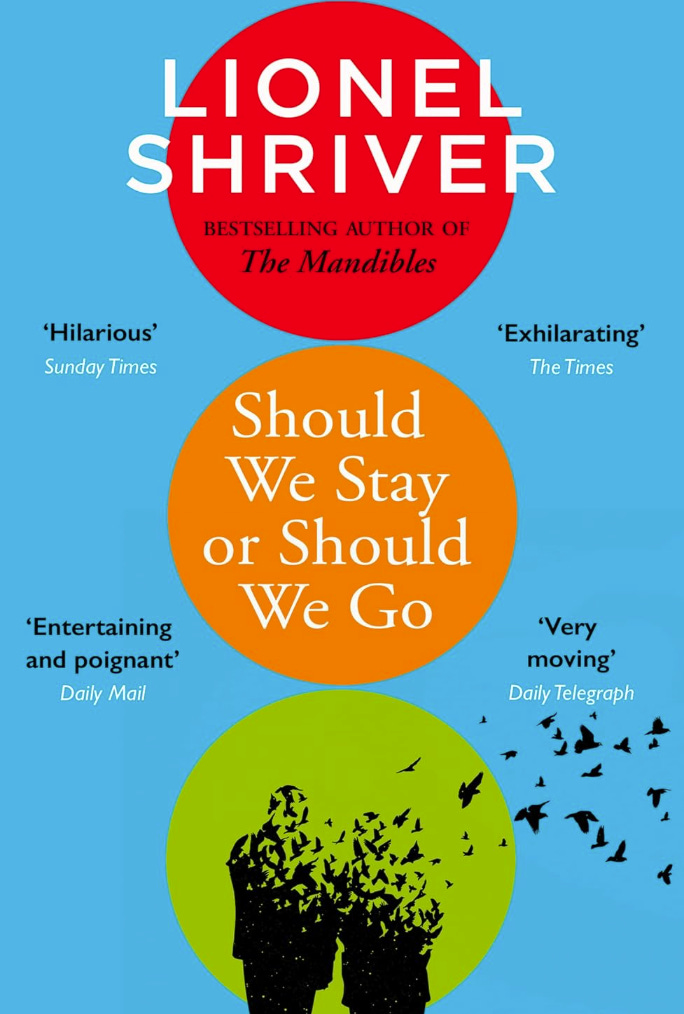
Given my lifelong interest in the question of care, dignity and dependency, I read Lionel Shriver’s 2021 novel Should We Stay or Should We Go with total fascination soon after it was first published. The book follows a long-married British couple: Kay (a former nurse) and Cyril (a former doctor). In their early 60s, they witness the devastating decline of Kay’s father. Traumatised and repelled by the slow cruelty of what they have witnessed, they form a suicide pact. They agree that when Kay turns 80, they will die together, choosing a swift end over the humiliation of gradual decline. This would also spare one another the anguish of watching the other endure a slow decline.
When we meet Kay and Cyril in the book as they make this pact, they are still in their 50s and the prospect of actually going through with the pact seems like a long way into the future. But we fast forward quickly into their 80s. Now what? Will they go through it? Won’t they? The genius of the book is that it refuses to settle on a single answer. Instead, we follow the couple through a series of alternative futures. Reading Lionel Shriver often feels like watching the private arguments of my own mind unfold on the page in vivid detail, as the perennial what-ifs are given fictional life: What if only one of them goes through with it, and the other is left behind? What if they hesitate too long and are forcibly placed in a care home by their children?
When I first read this book, I had just witnessed my own grandmother wither away and die painfully - a death I wouldn’t have wanted for an enemy let alone for her - or for myself - in a million years. The prospect of making a suicide pact with my husband to spare us the same fate was already lodged somewhere in the back of my mind before I ever picked up the book. The issue was personal for Lionel too. Writing in a Guardian column, she explained::
“This is a personal matter for me, and not only because I’m already 64 myself. Both my parents are still alive – although in my mother’s case that may be stretching the meaning of the word. My father is 93; my mother turns 90 in July. Watching their old age progress has been mystifying, painful, and sometimes heartening.”
She gives the details: Her mother, once a class valedictorian with movie-star looks and many talents - two volumes of published poetry, able to play cello - suffered a stroke in 2015 and could no longer walk or use her right hand. Incontinent, she grew plump and soft. She did grow more pleasant though, much to Lionel’s confusion:
“Her demeanour is pleasant. She’s undemanding and benevolent. She’s perfectly nice. But my real mother was not nice! Our relationship was often prickly. Real Mother was prone to sudden, unexpected bursts of resentment. Real Mother was a touchy, complicated woman who banged about the kitchen in unexplained white rages while giving us all the “silent treatment”. I’d trade all that niceness for one more night of crashing silverware in a heartbeat.
If Real Mother could see herself now, would she wish her elderly self were dead? Even Fraudulent Mother often asserts that she’s ready to die.”
Lionel’s father remained cogent at the time - albeit with odd lapses - but his body was starting to fail. Yet he remained fundamentally himself, and adapted to the “steady shrinking of his life – no more New York Philharmonic or Metropolitan Opera – with resigned grace.” How about his sense of dignity? Lionel writes:
“These days, he accedes to his faithful carer’s necessary involvement in his intimate bodily functions without a fuss, for he’s not hung up on younger people’s strangely bathroomy version of what constitutes “dignity”. My father still has dignity, or the kind that counts. He remains in the grip of an astonishing life force. He’s proud of his accomplishments and won’t let anyone forget them. Despite the imposed compromises of advanced age – compromises that, in my naivety, I imagine would be unacceptable to me – my father clings ferociously to survival. Glimpsing this future, his younger incarnation would be sobered, but lifelong self-regard would preclude his ever vowing that he’d rather be dead.
We enter into an implicit contract with ourselves regarding what we’re willing to put up with in order to stay in the game, and when we’re younger the conditions under which we’ll submit to continued existence can be strict. Maybe it sounds ludicrous, but for much of my life I’d have told you that a future in which I could no longer play tennis was out of the question. I’m an intensely physical person, and the notion of sitting indefinitely in my mother’s wheelchair strikes me as intolerable. Faced with some mildly disagreeable prospect, I’m given to tossing off carelessly: “I’d rather kill myself!”
In a darkly ironic twist of fate, the Lionel Shriver of 2025 found herself in exactly the situation which she had imagined in the article and in her novel. That summer in 2025, she had major back surgery was suddenly readmitted to hospital with various symptoms. She was eventually diagnosed with Guillain-Barré syndrome - a rare autoimmune disorder whereby the body attacks its own nervous system and the musculature dissolves. She writes of the devastation in The Free Press:
“This obscure, perverse malfunction could have been specifically designed to annihilate Lionel Shriver, 68. I’m a writer and, for months, neuropathic hands, at once numb and agonizing, made it impossible to type. I’ve always been vain about my fitness, too… I went from sets of 500 sit-ups to being unable to do one. GBS melted the biceps from my two regular 70/60 sets of push-ups into wrinkly bingo wings. My calf muscles from countless thousands of burpees and mountain climbers vanished—leaving droops of crenulated skin as souvenirs. At first, I could only lift a cup of coffee using both hands. I couldn’t turn over in bed. I’ve had to learn to stand and then to walk, slowly, tremulously, from scratch.”
With her characteristic humour, she describes aspect of dependency she had once so dreaded: the inability to take her of her own bodily functions:
“Incapable of seeing to certain unpleasantness in private, every disabled patient must arrive at a forthrightness about what happens to food and drink. I was distressed to read in one hospital survey that more than two-thirds of patients over 60 considered double incontinence “as bad as or worse than death.” But there is life after dignity. Why, living without dignity is a certain relief. You stop being embarrassed. Help to shit or pee is simply a service you require. That said, for me one of the thrills of finally being discharged from the hospital was not reporting to strangers every morning whether I’d had a bowel movement.”
The Lionel Shriver of 2021 - who had not yet lost her bodily functions - had written about incontinence already. In the same Guardian article quoted from above, she also wrote about Katie Englehart’s book, The Inevitable, in which Englehart reports on people who are determined to exercise control over their own deaths. Most people who ask to die are not in terrible pain, or afraid of future pain. Why do they want to die? Lionel quotes Katie:
“They fear “losing autonomy”, “loss of dignity”, and “losing control of bodily functions”. Indeed, the latter two anxieties are often synonymous: “A lot of people I interviewed equated dignity precisely with sphincter control.”
Can dignity and dependence coincide?
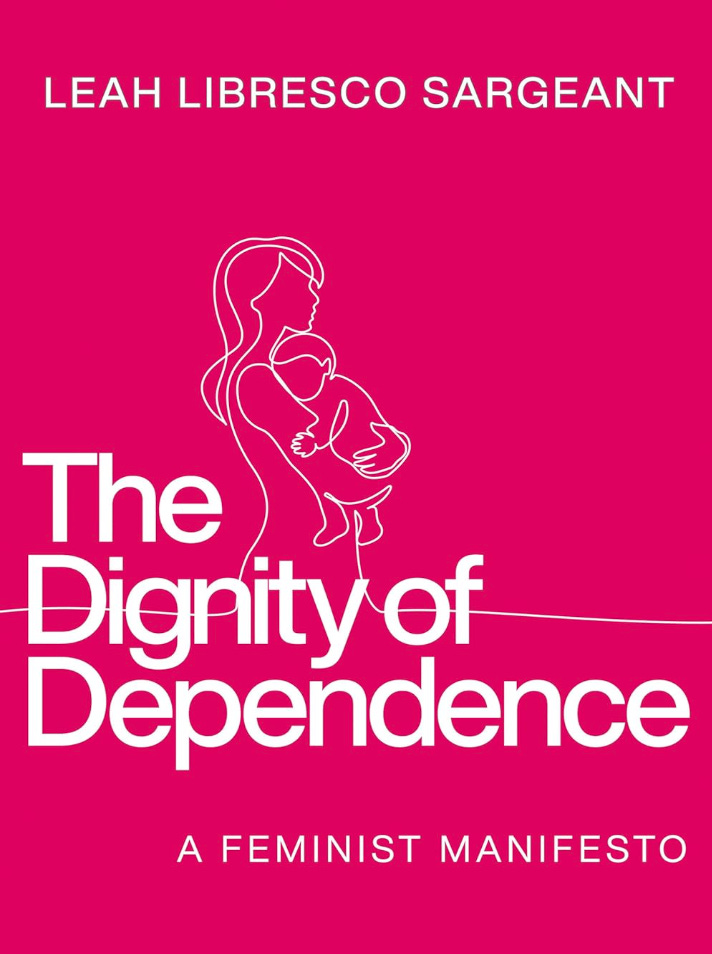
More recently, Leah Sargeant has argued that this fear of losing our dignity and autonomy is part and parcel of the “cult of independence”, a modern cult which has left us ill-equipped to accommodate material realities of care and dependency. In particular, she argues that that true dignity, especially for women, lies in embracing dependence as an inherent part of life, rather than a weakness or barrier. She posits that the autonomy-based ideal of freedom is based on a masculine model which is particularly flawed for women. Feminists should reject the autonomy based model because it fails to accommodate women’s realities such as pregnancy, motherhood and caregiving. Her book is full of stories of pregnant women and new mothers whose needs have been completely overlooked in our rush to embrace the ideal of autonomy - an ideal that is physically impossible to meet for the new mother-infant dyad. For men, the “lie of autonomy is a little roomier”, but it will eventually catch up to them, she believes. After all, men need to be needed too. This is what it means to be human - we are relational creatures. We depend on webs of mutual dependence rather than isolated independence. This includes receiving care and providing it, both of which are essential to our dignity and purpose.
There are many other aspects of the book that I’d like to touch one one day and some areas where I disagree with Leah, but she is right to hone in on our need to be needed and our relational nature.
If - and it is a big if - it is possible to foster a continuing sense of dignity in people whose mental and physical capabilities are severely diminished or are slowly decaying, I believe our best chance of achieving it is to find creative ways for them to retain their sense of purpose and service to others. By purpose, I don’t mean productivity or independence per se, but the possibility that the person may still be able to give something - whether it is their attention, presence, art, skill, story, or love - within a shared life. Below are some specific examples of how people have managed to do this.
Chris Punsulan
The only YouTube “influencer” I have ever followed is Chris Punsulan. In particular, before the passing of his beloved grandmother, (who he calls Lola), I followed his series on being a full-time carer for her. Chris shouldered this responsibility at just 22 years old, when his grandmother was very elderly with severe arthritis and osteoporosis. Given her loss of mobility and normal functioning, Lola needed a lot of help with daily movement as well as daily tasks such as showering and using the bathroom. For most carers, this can be a daunting, momentous and sometimes isolating road to take. For most of us who currently don’t require this level of care (yet), the thought of becoming so dependant is also full of fear and dread. But Chris recorded his daily practices and rituals with his grandma and shared them with thousands of other people, showing how his care routine for his grandmother was also full of profound dignity, care and love.
This particular video titled “My Grandma Loves to Fold Napkins” stayed with me for a long time. In it, Chris explained that he gave his grandma napkins to fold every day for breakfast, lunch and dinner as a way for her to exercise her hands and for her to feel a sense of purpose. What struck me about this video is that Chris and his family knew that his Lola needed to move her hands as much as possible, otherwise they would continue to close even further. But he didn’t just ask her to move her hands as an isolated, lonely medical exercise. Instead, he implemented a little ritual for her which incorporated one of the few body parts that his Lola could still move in a way that allowed her to contribute to the family mealtimes. It is tiny, repeated gestures like this that allow a person to retain their sense of dignity and purpose in life in small ways, even as they face the loss of all their mobility and usual bodily function. It helps them to feel like a loved part of the family, rather than “just” a burden, someone to be cared for.

Chris’s grandmother had previously been a teacher. She would have been used to being active, mobile, and being of service to others. Chris’s depictions of her reminds me very much of my own grandmother before she passed away. My grandmother was always so fierce and larger than life that we affectionately called her Dragon Lady. She towered over our family like an almost mythic figure, binding us together. She spent her life caring for her children and grandchildren, cooking for us, baking us biscuits, and lecturing us about getting married and giving her more grandchildren. The very last thing she did before she was admitted into the hospital where she would take her last breath was cook herself her own meal. It was important for her to feel that she could continue to do this for as long as humanly possible, no matter how sick she got or how painful it was for her to move. As her body decayed, we had to find new ways to accommodate her need to serve her family, as Chris did with her grandmother by asking her to fold napkins. It is incredible how much pain one can endure and insist on enduring if they feel it is for a greater purpose or sense of service. As our sense of abilities decline, the smallest of acts can feel like the greatest of contributions.
For most of us, this is a basic human need and one of the biggest fears we have about getting older or getting sick is losing the ability to be useful, to contribute, to retain a sense of self and dignity. We don’t want to “just” be a burden, even in families and communities which haven’t embraced the “cult of autonomy.” Yet most care models we have now don’t seem to account for this at all - they siphon care into a separate sphere, isolated into its own lonely burden. And who would want that? We need to find models of care that can integrate care into a wider sense of belonging, embeddedness and purpose .
Even before my grandmother got more seriously ill, she suffered from the usual aches and pains of ageing. She would regularly ask her grandchildren to massage her legs for her. But here’s the thing: the massages were also fun for us. It wasn’t just an activity we did out of pity for a sick, old woman who no longer had anything to offer or who was a burden. My grandmother had always told us stories. When we were very little, she would tell us these stories as we sat on her lap, playing with the loose skin of her wrinkled hands. As we got older, she told us those stories while we massaged her tired, aching legs. She did not feel like a burden, and we did not feel like caregivers - she could still give her stories to us, and we felt proud when we got the pressure of the massages “just right.” She could still retain the majestic dominion of a Dragon Lady even as she withered before our very eyes.

Here is how I have tried to use this model when caring for others in very small, daily ways, and when receiving care from others:
A family member needed to walk often after surgery. I soon realised that if I just tried to get them to walk or check in on them as if they were “just” a patient, they would resist. So, instead, I started to say that I wanted them to walk with me from our work to near where we live because I wanted the company on my own walk. They always agreed when I phrased it like this - they felt like they were needed and useful, rather than a burden. We would use the walk to catch up with each other and plan other responsibilities.
When my mum was ill last year, I tried at regular intervals to ask her to help me cook meals that I knew I could make on my own. I didn’t technically need her physical help, but her feeling like I wanted her presence and skills did tap somewhere deep into her psyche. She didn’t always accommodate me but she was more likely to do so if I phrased it this way. The days when we could get her to get out of her bed and doing simple chores like this were always the best days of her recovery.
When I have had to rely on care from others, either after surgery or for other reasons, I also felt terrible about being unable to contribute. I told myself often during this period that this was my time to allow other people to contribute, to feel they were helping me, and to display their generosity.
Francis Tsai
These are just small, daily examples. However, the sense of purpose has allowed others to do much more extraordinary things even with a progressive illness. For example, Francis Tsai, the American comic book artist, was diagnosed with amyotrophic lateral sclerosis (ALS) aged 42. ALS is a progressive, neurodegenerative condition that attacks motor neurons, leading to muscle weakness, paralysis, and eventually loss of voluntary movement. As the disease advanced, it first robbed him of the use of his arms and hands, preventing him from drawing. Undeterred, Francis adapted to his new abilities by holding an iPhone or sylus in his lift foot and drawing / painting digitally with the big toe of his right foot. Then he lost foot mobility too. So, he turned to eye-gaze (or eye-tracking) technology.
With help from friends in the art and tech communities, as well as the company Tobii, he set up a system using infrared cameras (like the Tobii PCEye) mounted on a tablet or kiosk. This tracked his eye movements to control a cursor, allowing him to draw in programs like SketchUp, Photoshop, and GIMP. He began creating art again and continued producing new pieces, even refining the technology through collaboration. Why did he do all of this? Tsai viewed his art as essential to his identity and purpose, famously stating variations of “I have work to do” in interviews.
Christopher Reeve
Last year, my husband took me to see a documentary about the life of Christopher Reeve, the Superman actor who suffered a severe spinal cord injury from a horseback riding accident that left him quadriplegic and dependent on a ventilator. The interviews in the documentary are very moving. The one that set me in floods of tears was one in which he describes waking up to his new fate, contemplating suicide in the throes of despair. He mouthed to his wife Dana: “Maybe we should let me go.”
Dana knelt beside him and said, without any hesitation:
“I’m only going to say this once. I’ll support whatever you want to do because this is your life and your decision. But I want you to know that I’ll be with you for the long haul, no matter what. You’re still you. And I love you.”
Reeve later reflected that her lack of hesitation was everything:
“I think if she had looked away or paused or hesitated even slightly... or if I had felt there was a sense of her being noble, I don’t know if I could have pulled through... but she didn’t back down. She didn’t hesitate. She didn’t blink or look away.”
Dana’s unflinching love was crucial to his decision to keep going. Even so, the documentary describes how difficult this was for him to adjust to - a man who had been able to play a fictional superhero and be a hero to his wife and children, now was totally dependant on them. Over the years though, as the family adjusted to this new reality, he found ways to contribute to his family life again rather than “just” feeling like a burden. A particularly touching contribution was teaching his son how to ride a bike, despite being unable to physically demonstrate it. His son, Will Reeve shared:
“He taught me how to ride a bike by telling me what to do, and that was meaningful,”
Will describes other ways that his father found to stay involved in the activity and action of family life, such as biking, soccer, or skiing instructions, despite being unable to physically carry out these activities himself.
In his memoir, Christopher Reeve himself wrote:
“I’m not living the life I thought I would lead, but it does have meaning, purpose. There is love... there is joy... there is laughter.”
Christopher Reeve’s depictions of the love of his wife reminded me of an article written by the neuroscientist David Linden in The Atlantic titled A Neuroscientist Prepares for Death. He also wrote movingly about the love of his wife, Dena:
“In 2021, my oncologist told me that I could expect to die within six to 18 months. That didn’t happen. Now, several years on, I get a CT scan every six months, and so far, the scans have shown that the remnant tumor in my heart wall has not grown since the surgery, nor has it spread to other organs. People ask me why I think I’m still alive, and I respond that I don’t really know, but that I think at least a part of it can be attributed to the deep and unconditional love I receive from my wife, Dena. I don’t say this lightly. I’m not speaking metaphorically or out of some sense of social or spiritual obligation. Rather, I’m saying it with all seriousness, as a biomedical researcher. I believe that the positive experiences that surround me, of which Dena’s love is the most salient, are activating my brain in a fashion that ultimately helps suppress the growth and spread of my cancer. I’m both fascinated and encouraged that scientists are beginning to understand the specific biochemical and electrical pathways by which signals flow from the brain to tumors like mine to modulate cancer progression.”
Practical considerations
Caring for someone is rarely simple. It can be exhausting, emotionally draining, and expensive. Purpose alone cannot answer every question, nor can it resolve situations of extreme pain or profound cognitive loss. The development of purpose-based pathways to care need to develop in tandem with serious conversations about what the purpose of end of life care is and when doctors should stop attempting to prolong life.
Then there are questions of who will provide the care and what kind of system or support they will need. How can people afford to provide this type of care? Will families need to sell off their homes to afford care home fees? If being cared for at home, how can people afford to take time off work?
Here are some other features of the kind of care which my Dragon Lady and Chris’s grandmother both received: They received this care in a multi-generational household in which many hands made lighter work. Now, I do admit I quite like my atomised, individual home right now, in a period of relative good health. But during periods of intense caregiving, I have also seen how having people to split the responsibilities with - both financial and caring responsibilities - is very helpful, as is having a shared hub of family life in which the relevant person feels they belong. In Chris’s case, he and his grandmother lived with many other family members who all helped with the care and ran their business together from the same home. In my case, my grandmother lived with my cousins but she also had 4 generations of people around her so we could fill a rota of care. Last year, when my mother was ill, we also worked to create a shared rota of responsibilities.
My future goal longer term care needs is for my loved ones and I to pool resources into a shared home base, which functions as both the financial and care “hub”, so we can accommodate long-term care needs when needed. But we also want to enjoy periods of atomisation when we can - being able to enjoy these freer phases of life. Being able to enjoy a season or two of selfishness may even later protect against feeling a sense of overburden or resentment when the time finally comes when we will need to come together again to provide longer term care.
However, alongside these practical considerations, when it comes to the question of dignity, I think what is becoming clearer is that what corrodes dignity is not just a straightforward loss of physical function. What corrodes dignity is at least partly being rendered useless, unwanted, or unseen — reduced to a problem to be managed rather than a person who still belongs. Where people are able to remain part of a shared life, to give something of themselves even in small and altered ways, dignity can endure far longer than we expect.